What Are the Top China Electric Cargo Bike Manufacturers?
China has become a major production base for commercial bicycles and light electric vehicles. Its manufacturers serve couriers, retailers, farms, campuses, and urban delivery fleets. This guide examines the top China electric cargo bike manufacturers through practical, evidence-based criteria.
The comparison considers frame design, motor performance, battery safety, payload ratings, braking systems, and after-sales support. A strong manufacturer should provide clear technical specifications and traceable quality procedures. Factory capacity also matters, especially for buyers needing consistent batches. Details matter. Product samples should be tested on real routes, not only displayed in polished catalogs.
A useful evaluation includes welding quality, waterproof connectors, charger protection, tire durability, and replacement-part availability. Certifications and market-specific compliance documents must be verified before purchase. Supplier communication deserves equal attention. Can the company explain its warranty terms, production timeline, and inspection process clearly?
Manufacturer claims need checking. Some advertised range figures may assume light loads, flat roads, and ideal temperatures. Real delivery work is less forgiving. Hills, frequent stops, rain, and heavy boxes can reduce performance. This article highlights established Chinese suppliers while recognizing that no factory is perfect for every application. Buyers should compare independent test results, visit production facilities when possible, and request references from fleet operators. The best choice depends on intended payload, operating environment, budget, and service expectations. A lower purchase price may become expensive when batteries, brakes, or controllers fail early. Reliable support often matters more than impressive specifications.
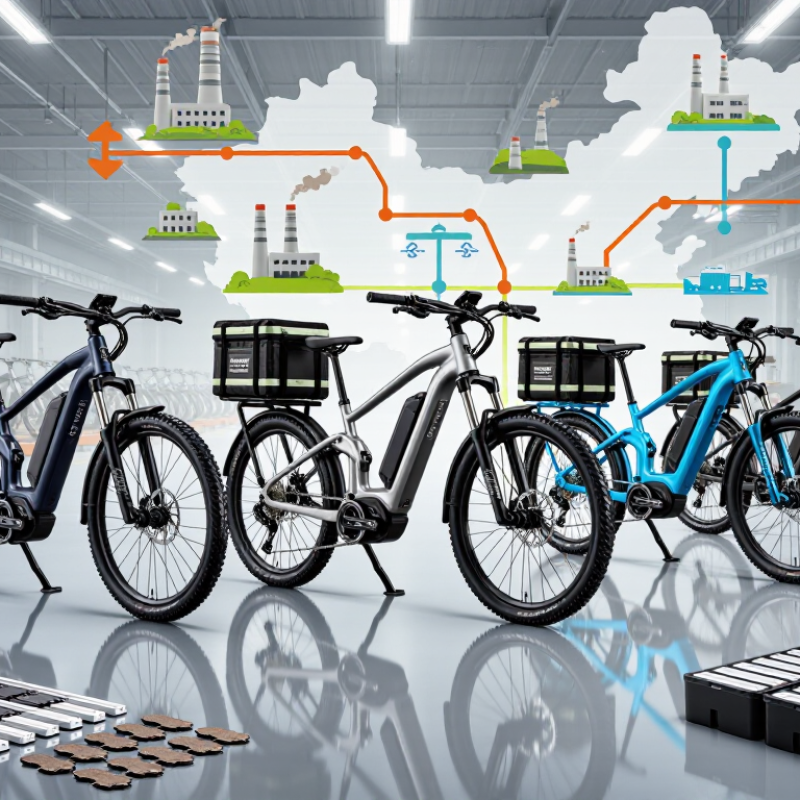
China’s Electric Cargo Bike Industry and Its Main Manufacturers
China’s electric cargo bike industry is expanding through urban delivery, family transport, and small-business logistics. The International Energy Agency reports that China remains the world’s largest electric two- and three-wheeler market. It represented more than half of global sales in 2023. The China Bicycle Association also recorded roughly 42 million electric bicycles produced in 2023. However, cargo models are often grouped with standard e-bikes. The data is useful, but not perfectly clean.
The main Chinese manufacturers usually fall into three groups. Large bicycle producers offer standardized frames and broad dealer networks. Commercial vehicle specialists develop reinforced cargo platforms, larger batteries, and fleet software. OEM and ODM factories provide flexible designs for overseas distributors.
A practical cargo bike may include a 250–750-watt motor, hydraulic brakes, steel racks, and a 48-volt battery. Frame welding, waterproof connectors, and load testing deserve close inspection. A low price can hide weak hinges or poor battery mounting.
Tips: Ask for independent test records, battery safety documents, spare-parts availability, and a clear payload rating. Check real climbing performance with a loaded bike, not an empty showroom model. Procurement teams should compare warranty terms and controller compatibility. One overlooked issue is service training; even a reliable bicycle becomes expensive when technicians cannot diagnose wiring faults.
How Electric Cargo Bike Manufacturers Are Evaluated
Evaluating China’s electric cargo bike manufacturers requires more than comparing factory prices. A reliable review begins with evidence from production sites, test rides, and customer support records. Inspect frame welds, fork alignment, cable routing, and load-bearing joints. These details reveal manufacturing discipline before a cargo bike carries real goods. Ask for documented payload ratings, not optimistic sales language. Good data matters.
Battery quality deserves careful attention. Review cell documentation, protection systems, charging behavior, and replacement availability. Test range with a realistic load, hills, wind, and repeated stops. Laboratory figures can mislead. A bike covering 80 kilometers unloaded may perform very differently in city traffic. Braking performance, tire grip, lighting, and steering stability should be measured under wet and dry conditions. Short tests hide weaknesses.
Professional evaluation also examines compliance, traceability, warranty handling, and spare-parts logistics in the target market. Manufacturers should provide clear manuals, serial-number records, inspection procedures, and responsive technical support. Speak with fleet operators when possible; their maintenance logs often expose recurring faults. Still, no score is perfect. A promising supplier may lack long-term field evidence, while a mature factory may need better software or finishing. That uncertainty belongs in the assessment, not outside it. Claims should remain verifiable.
Leading Chinese Electric Cargo Bike Manufacturers
China electric cargo bike manufacturers have become important suppliers for urban delivery, family transport, and small-business logistics. Leading manufacturers usually combine frame engineering, battery integration, and high-volume production. Their experience often appears in practical details: reinforced rear racks, low step-through frames, sealed wiring, and stable kickstands.
A reliable factory should explain its testing process clearly. Ask about payload trials, braking performance, battery protection, and water-resistance checks. Look for documented quality procedures, traceable components, and safety certifications accepted in the target market. Experienced manufacturers can also adjust wheel sizes, cargo boxes, seating systems, and controller settings for different roads. Small details matter.
The best supplier is not always the largest one. Communication, replacement parts, and production consistency can matter more than impressive factory photos. I would request sample units before placing a large order. Test them on slopes, uneven pavement, and repeated stop-and-go routes. Some factories may promise fast customization but underestimate tooling time. That is a common weakness. Buyers should record defects, charging behavior, and handling comfort during real use. A careful supplier will discuss these findings openly and improve the design when necessary.
Key Models, Technologies, and Manufacturing Capabilities
China’s electric cargo bike manufacturers often build around three practical formats: longtail bikes, front-loading box bikes, and compact delivery trikes. Each suits a different route. A longtail can carry two child seats or stacked parcels, while a front box keeps bulky loads low and visible. Trikes offer a stable platform, though tight turns can feel awkward. Test the actual load, not just the frame.
Key technologies include mid-drive or hub motors, removable battery packs, hydraulic disc brakes, and torque or cadence sensors. Motor choice affects hill climbing, maintenance, and how naturally assistance responds. Battery capacity matters, but cell quality, weather protection, and charging access matter too. Details count. Ask for rated payload, braking distance, and range under load; an unloaded test ride tells only part of the story.
Manufacturing capability shows in repeatable welds, aligned wheels, sealed wiring, and consistent paint thickness. A factory with in-house frame production may control fit and finish more closely, while outsourced components can create variation between batches. Request sample inspection records and a clear parts list. I would still inspect a production unit personally, because a polished prototype can hide small assembly issues. That extra check is not glamorous, but it is useful.
What Are the Top China Electric Cargo Bike Manufacturers? - Key Models, Technologies, and Manufacturing Capabilities
The table below summarizes common electric cargo-bike product formats and manufacturing capabilities found in the Chinese supply market. Specifications are indicative industry ranges, not claims about any particular manufacturer or model.
| Product or Capability Area | Common Configuration | Indicative Specifications | Relevant Technologies | Manufacturing Considerations |
|---|---|---|---|---|
| Longtail cargo bike | Extended rear rack; often configured for delivery loads or passengers | Typically 20–26 in wheels; payload capacity varies by frame and equipment, commonly around 100–200 kg including rider | Rear-rack mounting systems, reinforced frame joints, hydraulic or mechanical disc brakes, optional torque sensing | Requires controlled frame alignment, rack-load validation, and testing of braking performance under load |
| Front-loading box bike | Cargo box positioned between the rider and front wheel; available in two- or three-wheel layouts | Cargo capacity depends on chassis and box design; commercial versions are commonly engineered for loads in the low hundreds of kilograms | Steering linkages, low cargo-platform design, reinforced box mounts, and braking systems suited to the loaded vehicle | Steering geometry, frame stiffness, and stability testing are especially important for front-loaded designs |
| Three-wheel delivery trike | Two wheels at the front or rear, with a cargo platform, box, or enclosed delivery compartment | Often designed for higher-volume urban delivery; speed, payload, and vehicle classification depend on the destination market | Differential or linked-wheel arrangements may be used; battery-powered assist and fleet telematics are optional | Production typically involves chassis welding, cargo-body assembly, electrical integration, and loaded-road testing |
| Compact utility cargo bike | Shorter wheelbase with a reinforced rear rack, front basket, or modular carrier | Usually prioritizes maneuverability and storage; wheel sizes and permitted load depend on the frame and intended use | Modular mounting points, removable battery options, and hub- or mid-drive motor configurations | Useful for standardized frame platforms with selectable racks, fenders, lighting, and regional component packages |
| Motor and drivetrain integration | Hub motor or mid-drive system selected for vehicle layout, terrain, and market requirements | Common battery systems use nominal voltages such as 36 V or 48 V; motor output and assistance limits must match local regulations | Pedal-assist sensors, motor controllers, battery-management systems, display units, and wiring harnesses | Compatibility checks, electrical safety controls, waterproofing, and end-of-line function tests are key assembly steps |
| Frame and cargo-body production | Steel or aluminum frame construction; cargo bodies may use metal, polymer, or composite panels | Material and wall thickness vary by design, target load, durability requirements, and cost objectives | Tube cutting, welding or brazing, surface treatment, CNC processing, and fixture-based assembly | A capable production process includes weld inspection, dimensional checks, corrosion protection, and traceable component control |
| Quality assurance and customization | Build-to-order configurations for cargo boxes, racks, colors, components, and destination-market requirements | Test plans and certifications depend on the product category and the regulations in each target market | Incoming inspection, torque checks, electrical testing, brake checks, and sample-based durability testing | Export readiness depends on consistent documentation, component traceability, packaging validation, and compliance review |
Note: Actual payload, range, motor output, battery capacity, and certifications should be verified against the specific vehicle configuration and the applicable rules in the intended sales market.
How to Compare Manufacturers for Different Cargo Needs
Choosing a China electric cargo bike manufacturer starts with the actual route, not the biggest payload claim. A bakery making short, flat deliveries needs different equipment from a maintenance team carrying tools up steep streets. Compare rated payload, cargo-box dimensions, wheelbase, and turning radius. Then ask how the bike handles a fully loaded start on a slope. Small details matter.
The World Economic Forum’s 2020 report, The Future of the Last-Mile Ecosystem, projected that urban last-mile delivery demand could grow 78% by 2030, with related emissions rising 32% against its 2019 baseline. These are forecasts, not guarantees.
Still, they show why fleet fit matters. For dense routes, check battery capacity in watt-hours, charging time, and whether batteries can be swapped. For heavy loads, request braking specifications and test stopping distance with cargo aboard. Ask for test records, warranty terms, spare-parts availability, and clear payload definitions.
Compare like with like. A quoted range may reflect a light rider, flat roads, and mild weather; real deliveries rarely behave so neatly. Request a loaded demonstration on your own route, if possible. Not glamorous, but useful.
One weakness in many comparisons is focusing on motor power while overlooking service access. A strong bike can still become a poor investment if routine repairs take weeks.
