What is a Screw Compressor and How Does it Work?
Screw Compressors are essential machines widely used in various industries. They are known for their efficiency and reliability. Understanding how these machines work can greatly enhance their application in real-world scenarios.
Screw compressors operate on a unique principle of compressing air or gas using two interlocking helical screws. This design eliminates the need for valves, which often lead to potential failures. The continuous flow generated by the screws ensures a smooth operation. However, users must be aware of maintenance needs to prevent breakdowns. Regular checks are key to ensuring optimal functionality.
While screw compressors excel in many areas, they may not be suitable for every situation. Their initial cost can be higher than traditional compressors. Despite this, their long-term energy savings often outweigh these upfront costs. In assessing a project, it’s crucial to weigh the benefits against potential drawbacks. Understanding your specific needs is vital in making the right choice for your applications.
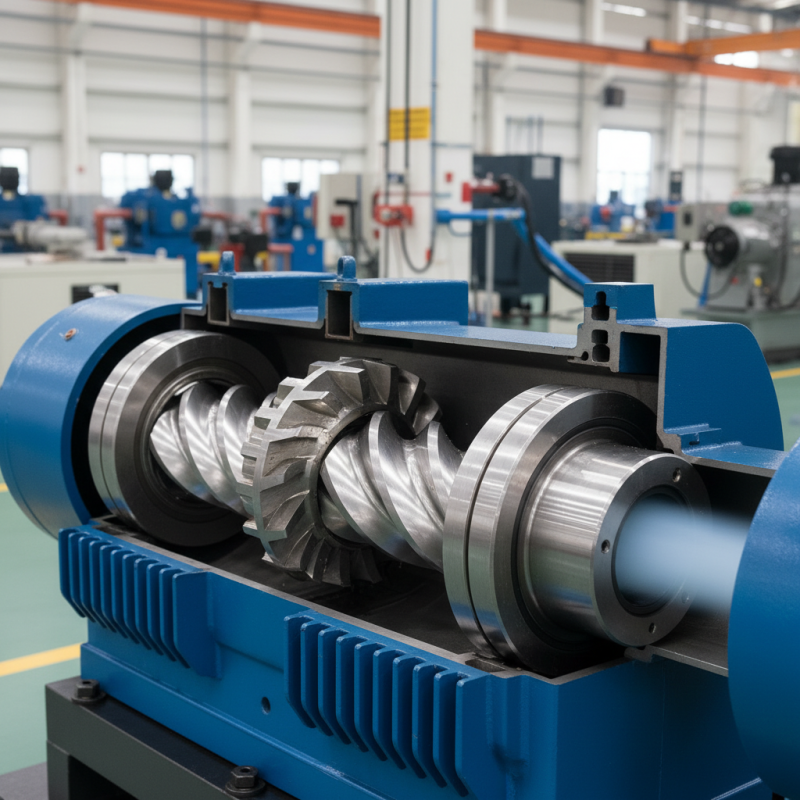
What is a Screw Compressor?
A screw compressor is an essential machine used for compressing gases. It operates by taking in gas through an inlet, compressing it with rotating screws, and then expelling it through a discharge. This process happens continuously, creating a smooth and efficient flow of compressed air or gas. Understanding the mechanics can help users appreciate its role in various industrial applications.
Screw compressors are known for their reliability. They often require less maintenance compared to other types. The design enables them to run quietly and efficiently over long periods. However, their initial installation cost can be high. Users need to weigh that against energy savings in the long run.
Tips: Regular maintenance checks are crucial to ensure optimal performance. Monitor the compressor's oil levels frequently. This can prevent issues and extend the lifespan. Consider the operating environment as well. Dust and moisture can hinder performance, creating more challenges. So, always think about proper filtration and environmental control.
Principle of Operation of Screw Compressors
Screw compressors are essential devices in various industries. They operate based on the principle of positive displacement. This means they compress air or gas by reducing its volume through screws. The mechanism involves two interlocking rotors. As these rotors turn, they create a vacuum, drawing in the air. The air is then trapped in pockets and compressed further as it moves along the rotors.
The design offers significant advantages. Screw compressors are efficient and provide a continuous airflow. This makes them suitable for applications that demand constant pressure, like refrigeration and air conditioning. However, they require precise engineering to function optimally. Wear and tear can lead to efficiency drops. Regular maintenance is crucial to prevent potential failures.
Understanding the inner workings of screw compressors can be quite complex. The balance between precision and performance is delicate. Minor misalignments can cause significant performance issues. Thus, operators should be well-trained in maintaining and troubleshooting these machines. Knowledge about their operation enhances reliability in real-world applications.
Components of a Screw Compressor
A screw compressor comprises several key components that work together for efficient air compression. The most vital elements are the rotors. These rotors are helical in shape and interlock with precision. As they turn, they create a chamber that draws in air. This design minimizes turbulence, leading to a smoother compression process.
Another important component is the timing gear. It ensures that the rotors maintain their alignment as they spin. This alignment is crucial for optimal performance. Misalignment can lead to increased wear and tear. Some systems also include an oil injection mechanism. This helps lubricate the rotors and seal the chambers. However, finding the right balance of lubrication can be challenging.
The housing of the compressor provides structural support. It can also influence heat dissipation during operation. Poor heat management may affect efficiency and longevity. Regular maintenance is essential to address wear and tear. Observing parts for signs of damage is crucial. This proactive approach helps ensure the compressor operates efficiently over time.
Screw Compressor Performance Metrics
Types of Screw Compressors and Their Applications
Screw compressors come in various types, each serving specific applications in industries. The two main types are single-screw and twin-screw compressors. Single-screw compressors use one rotating helical screw, often seen in low-pressure applications. Twin-screw compressors, on the other hand, feature two interlocking screws, allowing for greater efficiency and pressure capacity. According to a report from the International Compressor Manufacturing Association, twin-screw models are gaining popularity due to their ability to deliver high efficiency with lower operational costs.
The application of screw compressors spans multiple industries. They are commonly used in refrigeration and air conditioning systems, providing reliable cooling. In the oil and gas sector, these compressors play a vital role in gas compression. They also serve in pneumatic conveyance, which requires steady air flow to transport materials. A study by the American Society of Mechanical Engineers highlighted that screw compressors have improved efficiency ratings by 15% over conventional piston compressors, particularly in continuous operation scenarios.
Despite their advantages, some users report challenges. Noise levels can be a concern, especially in residential settings. Additionally, maintenance can become complicated if not performed regularly. This emphasizes the need for proper installation and periodic check-ups to ensure optimal performance. Awareness of these factors can lead to better decision-making when selecting a screw compressor for various applications.
Advantages and Limitations of Screw Compressors
Screw compressors are popular in many industrial applications. They compress air using two helical screws that rotate within a cylinder. This design allows for continuous operation, reducing energy costs. However, despite their efficiency, screw compressors come with advantages and limitations.
One major advantage is their durability. According to a report by the Compressed Air & Gas Institute, screw compressors can last over 30,000 hours with proper maintenance. They also operate quietly, making them suitable for workplaces that need a low noise level. Yet, they typically have a higher initial cost, which can be a barrier for some businesses.
Tips: Regularly inspect the lubrication system. This can prevent unnecessary wear.
Another limitation is their efficiency at low loads. When the demand for compressed air dips, energy consumption may still remain high. In terms of flexibility, screw compressors might not adapt well to sudden changes in demand compared to piston compressors. Understanding these nuances helps businesses make informed decisions on their air compressor systems.
Tips: Evaluate your pressure and flow requirements carefully. This will help avoid overspending on unnecessary capacity.

