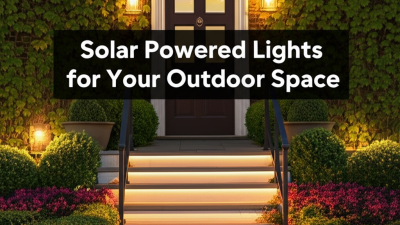
China Best Solar Lamp Supplier for Global Buyers

Choosing a China-based solar lamp supplier involves more than comparing prices. Global buyers need dependable products, clear specifications, and communication that holds up after samples arrive. A useful evaluation starts with practical details: panel output, battery capacity, charging time, light distribution, and expected operating hours. Ask how performance changes on cloudy days. Small differences matter.

The product should also suit its installation environment. A garden light faces different conditions from a warehouse security fixture or a roadside sign. Check enclosure materials, ingress protection ratings, temperature limits, and mounting hardware against the project’s needs. Request test reports and confirm which certifications apply in the destination market; requirements vary, and a supplier’s general claim is not a substitute for documentation. Samples can reveal uneven brightness, loose seals, or controls that are harder to use than the brochure suggests.

Reliable sourcing takes steady follow-up. Discuss minimum order quantities, production lead times, packaging, spare parts, warranty terms, and the process for resolving defects before placing a large order. A capable supplier should answer technical questions plainly and explain limitations, not only highlight advantages. That is reassuring.

There is no perfect specification for every project. Even a well-tested solar lamp may underperform when shading, poor placement, or unrealistic runtime expectations are overlooked. Buyers can reduce surprises by sharing site conditions and intended use, then reviewing a sample under realistic conditions. Careful checks take time, but they make supplier comparisons more meaningful and purchasing decisions more grounded.
China Best Solar Lamp Supplier for Global Buyers

What Makes China a Major Source of Solar Lamps

China Best Solar Lamp Supplier for Global Buyers

What Makes China a Major Source of Solar Lamps

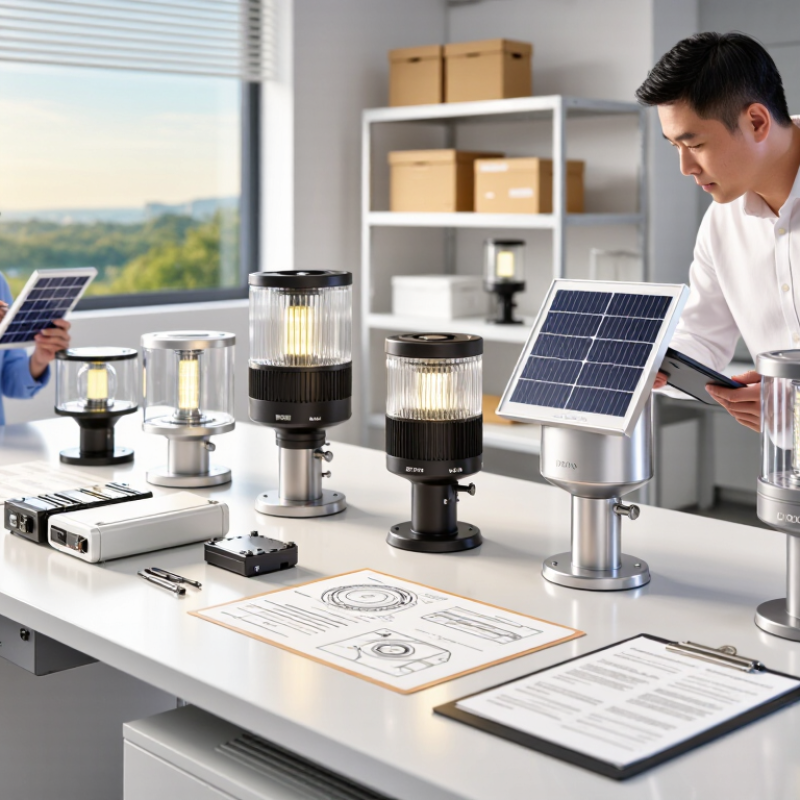
China’s position in solar lighting reflects a deep manufacturing ecosystem, not one single advantage. The International Energy Agency’s 2022 report, Solar PV Global Supply Chains, found that China held over 80% of global manufacturing capacity across key solar photovoltaic supply-chain stages. This concentration supports access to panels, batteries, LED components, and control electronics. For buyers, nearby component suppliers can shorten sourcing cycles and make product customization more practical. A factory visit may reveal the difference: panels being tested, battery packs assembled, and lamp housings checked on the same industrial site.

Scale matters. Large production networks can offer a wide range of wattages, mounting styles, and battery capacities. Yet a low quotation does not prove strong performance. Solar lamps depend on how components work together, especially under cloudy weather or repeated charging. The IEA’s data describes the broader solar supply chain, not the quality of every finished lamp. That distinction is easy to overlook. A supplier’s test records and production consistency still need close review.

Tips: Request battery specifications, panel output, and operating-time test conditions. Ask whether runtime was measured with a fully charged battery and under what brightness setting. Compare samples using the same test method. Small details matter—sometimes more than the catalogue suggests.

Types of Solar Lamps Available from Chinese Suppliers

Chinese suppliers offer several solar lamp types for different sites, from garden paths to remote work areas. Solar garden lights often use short stakes and warm LEDs. They suit borders and small courtyards, where soft light matters more than wide coverage.

Solar street and area lights use larger panels, batteries, and higher-output fixtures. Buyers should compare lumen ratings, battery capacity, and operating hours, not wattage alone. A motion sensor can reduce overnight energy use, though frequent activity may shorten runtime. Ask suppliers how performance changes after cloudy days. Details matter.

Solar floodlights provide focused illumination for entrances, yards, and loading zones. Wall-mounted security lamps often combine a motion sensor with an adjustable head. Portable solar lanterns are lighter options for camping, temporary tasks, or emergency kits. Some models include USB charging, but that feature can compete with lighting time. Check the controls in person if possible. Small switches can be awkward with gloves.

Choosing the right type depends on location, mounting height, and sunlight exposure. A lamp that works well in a bright coastal yard may disappoint under trees. Product specifications help, but they do not replace a sample test. Even experienced buyers can miss a poor cable seal or unclear installation instructions. That is worth checking.

How Solar Lamps Are Designed and Manufactured

Designing a solar lamp starts with its working conditions. Engineers consider daily sunlight, expected lighting hours, temperature changes, and the mounting location. A garden path needs a different beam pattern from a security light near a doorway. Small details matter. A shaded corner can reduce charging time more than buyers expect.

The main components are a solar panel, rechargeable battery, LED module, controller, and protective housing. The panel converts sunlight into electricity, while the controller manages charging and switches the lamp on when ambient light falls. Battery capacity must match the intended runtime, not simply look impressive on a specification sheet. During development, teams test brightness, charging behavior, water resistance, and performance across repeated cycles. Results can expose awkward compromises. A brighter setting may shorten overnight operation.

Manufacturing turns those design choices into repeatable products. Workers inspect incoming components, assemble circuit boards, connect wiring, and seal the housing against moisture. Each lamp should undergo checks for electrical function, charging response, and visible defects. Samples are also tested after exposure to heat, cold, and vibration. No test perfectly recreates years outdoors. That limitation deserves honest attention, especially when lamps face heavy shade or long rainy seasons. Clear installation guidance helps buyers choose suitable locations and understand realistic performance.

How Global Buyers Can Evaluate Chinese Suppliers

China Best Solar Lamp Supplier for Global Buyers
How Global Buyers Can Evaluate Chinese Suppliers

A supplier’s catalogue is a starting point, not proof of performance. IRENA’s Renewable Capacity Statistics 2024 reports that global solar capacity reached about 1,419 GW by the end of 2023, following a 346 GW increase that year. This rapid growth makes careful product evaluation more important, not less. Ask suppliers for dated test reports covering battery capacity, light output, charging time, and runtime. Check that model numbers on reports match the lamps being quoted. Small mismatch, big concern.

Request samples and test them under realistic conditions. Place a lamp outdoors, record daily sunlight exposure, and measure runtime after cloudy days. Inspect the panel, cable seals, housing, and fasteners; water resistance claims mean little without supporting test documentation. Ask how battery performance changes over repeated charge cycles, and whether replacement parts are available. A polished factory video cannot answer these questions.

Evaluate the supplier’s quality process as well as its product. Ask for written inspection criteria, batch traceability, defect-handling procedures, and references from comparable export markets. Verify certificates with the issuing body where possible, and clarify warranty exclusions before signing. A low quote may omit packaging tests, spare parts, or consistent component specifications. I would still leave room for uncertainty: one sample cannot represent every production batch. A pre-shipment inspection can reduce that gap, though it cannot remove it entirely.

Key Steps in Sourcing Solar Lamps from China

China Best Solar Lamp Supplier for Global Buyers

Key Steps in Sourcing Solar Lamps from China

Sourcing solar lamps starts with a clear use case. A pathway light needs different brightness and mounting from a security lamp. Share photos, installation height, expected nightly runtime, and local weather conditions with potential suppliers. Small details matter. A shaded garden may not charge a panel well, even on a sunny day.

Request samples before discussing large orders. Test charging and runtime across several evenings, and note how the lamp performs after cloudy weather. Ask for the battery type, panel output, light source details, and ingress protection rating. Verify these specifications against test reports, not only a product sheet. A sample can look convincing. It may still reveal weak seals or uneven light.

Compare suppliers by production capacity, quality checks, packaging, and communication—not price alone. Confirm the agreed specifications in writing, including color, accessories, carton dimensions, and inspection criteria. Ask how defects are recorded and handled. Build time for revisions; samples and mass production may differ. One overlooked issue: buyers sometimes test indoors, then discover the lamp receives too little sunlight at the actual installation site.

China Best Solar Lamp Supplier for Global Buyers — Key Steps in Sourcing Solar Lamps from China
Sourcing Step What to Define or Request What to Verify Useful Evidence or Checks Planning Consideration
1. Define the application Specify whether the lamp is for gardens, pathways, streets, security, camping, or indoor emergency use. Set brightness, operating hours, mounting method, and target market. Confirm the proposed design suits the location, expected weather, installation height, and local lighting requirements. Written product brief; installation drawings; target-market requirements. Clear specifications reduce mismatched quotations and sample revisions.
2. Compare supplier capabilities Ask about product development, production processes, quality control, export experience, and whether key components are made in-house or sourced externally. Check that the supplier can explain its production and inspection process and provide consistent product documentation. Factory or production-area assessment; process flow; sample inspection records; references where available. Assess the actual production arrangement, not just the supplier’s product catalogue.
3. Evaluate the solar and battery system Request the solar-panel type and rated power, battery chemistry and capacity, controller functions, and charging and runtime test conditions. Check that performance claims state the test conditions. Runtime depends on battery condition, sunlight, lamp output, temperature, and operating mode. Component specifications; charging and discharge test results; battery safety documents applicable to the product. Compare complete-system performance rather than panel wattage or battery capacity alone.
4. Review environmental protection Define required resistance to rain, dust, heat, cold, and corrosion for the intended installation. For an ingress-protection claim, request evidence tied to the relevant enclosure and test conditions. IP-code testing is covered by IEC 60529. Test report identifying the model or enclosure tested; materials and sealing details. An IP rating describes protection against ingress under specified tests; it does not by itself establish overall outdoor lifetime.
5. Check safety and market compliance Identify destination countries and applicable electrical, battery, chemical, labeling, and packaging requirements before ordering. Match certificates and reports to the exact model, components, and destination market. Request clarification on the standards and regulations claimed. Relevant test reports; declarations or certificates required for the destination market; battery transport documentation. Requirements differ by product type and market. Lithium batteries shipped internationally may require UN 38.3 test documentation under applicable transport rules.
6. Request and test samples Order representative samples with the proposed panel, battery, controller, LED, enclosure, and packaging. Check workmanship, controls, charging behavior, light output, labels, and operation after charging and discharge cycles appropriate to the intended use. Approved reference sample; documented test checklist; photos and recorded results. Approve the final configuration in writing; a sample with different components may not represent bulk production.
7. Confirm quotation and order terms Compare itemized pricing, minimum order quantity, tooling or customization charges, spare parts, payment terms, and delivery terms. Confirm product configuration, packaging, inspection criteria, responsibilities, and delivery point in the purchase contract. Detailed quotation; signed specification; purchase order; agreed Incoterms® rule and named place. Compare quotations on the same specification and delivery basis. Incoterms® rules allocate certain costs and responsibilities between seller and buyer.
8. Approve packaging and labeling Provide artwork, language requirements, warnings, barcode details, carton marks, and packaging strength requirements. Verify that labels and manuals match the destination market and the approved product configuration. Pre-production artwork; packaging sample; approved manual and label files. Resolve labeling and packaging requirements before mass production to avoid rework.
9. Monitor production and quality Agree inspection stages, sampling method, defect classification, and acceptance criteria before production begins. Check product configuration, appearance, function, packaging, and quantity against the approved specification. Production updates; inspection checklist; inspection report; corrective-action records if issues arise. Use criteria agreed in advance; inspection does not replace supplier process controls or contractual quality requirements.
10. Plan shipment and after-sales support Confirm shipment documents, battery transport arrangements where applicable, spare-parts availability, warranty terms, and claim procedures. Check shipping paperwork and ensure the product, packaging, and declared battery information are consistent. Commercial invoice; packing list; transport documents; warranty and service procedure. Allow time for destination customs procedures and confirm who handles freight, insurance, and import clearance under the agreed delivery terms.
Note: This table is a general sourcing checklist, not a certification or legal determination. Applicable standards, testing, and import requirements depend on the product design and destination market; confirm them with qualified testing and compliance professionals.
(08) 7200 3909